Be a Warrior!
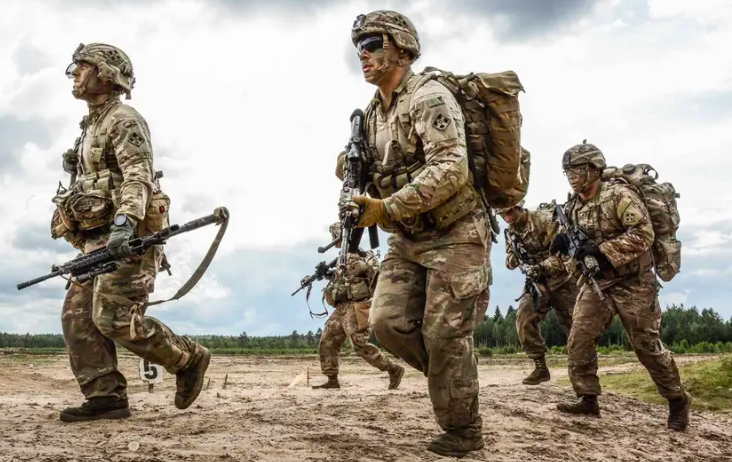
Fight! Fight! Fight!
Why is it that everything to do with disease…whether it’s cancer or Parkinson’s or dementia…is always framed in terms of war?
“She’s fighting a hard battle with cancer.”
“He lost his fight. In the end, cancer won.”
“He has a real warrior attitude, determined to battle his Parkinson’s disease.”
Given this language, does this mean that you ‘failed’ if you ultimately succumb to your disease? Did she ‘give up and give in’ to her cancer? Didn’t she fight hard enough?
So now, not only is the poor woman dead, she actually bloody well failed at fighting hard enough. Now she gets to wear the stigma of failure as well. Isn’t that special?
War, by definition, is a bloody game with winners and losers. But when you look at the fallout of any war, it seems to me, that everybody loses.
In the case of fighting my disease, please tell me how I can possibly win? And what exactly would winning look like?
Would it mean I’d eradicated a disease that currently has no cure? Well, no. That’s certainly not how it works. That’s not possible.
Bring on the drones! We must soldier on!
So would a win be that I staved it off for awhile by eating all the healthy food I can and exercising regularly? And couldn’t I do that in a self-caring way, instead of doing it armed with angry words that act like swords and guns?
I understand the intention. We’re all supposed to dig deep and fight against whatever our condition/disease is by doing all the right things while paired with a soldier’s intensity and passion to destroy.
Destroy! Battle! Fight! Kill!
But doesn’t it all just sound so damned angry? And aren’t we already sick of hearing about things like trump’s newly-named Department of War? In a world filled with so many bloody war-zones, does my body have to be a battleground as well?
When did we decide that everything had to be described in such ugly war-mongering terms? And does this language further legitimize the glorification of war and violence? And ultimately, wouldn’t I just be fighting myself? That seems rather self-defeating.
So here’s my declaration: I do not give permission for my body to be a war zone.
So what is the alternative?
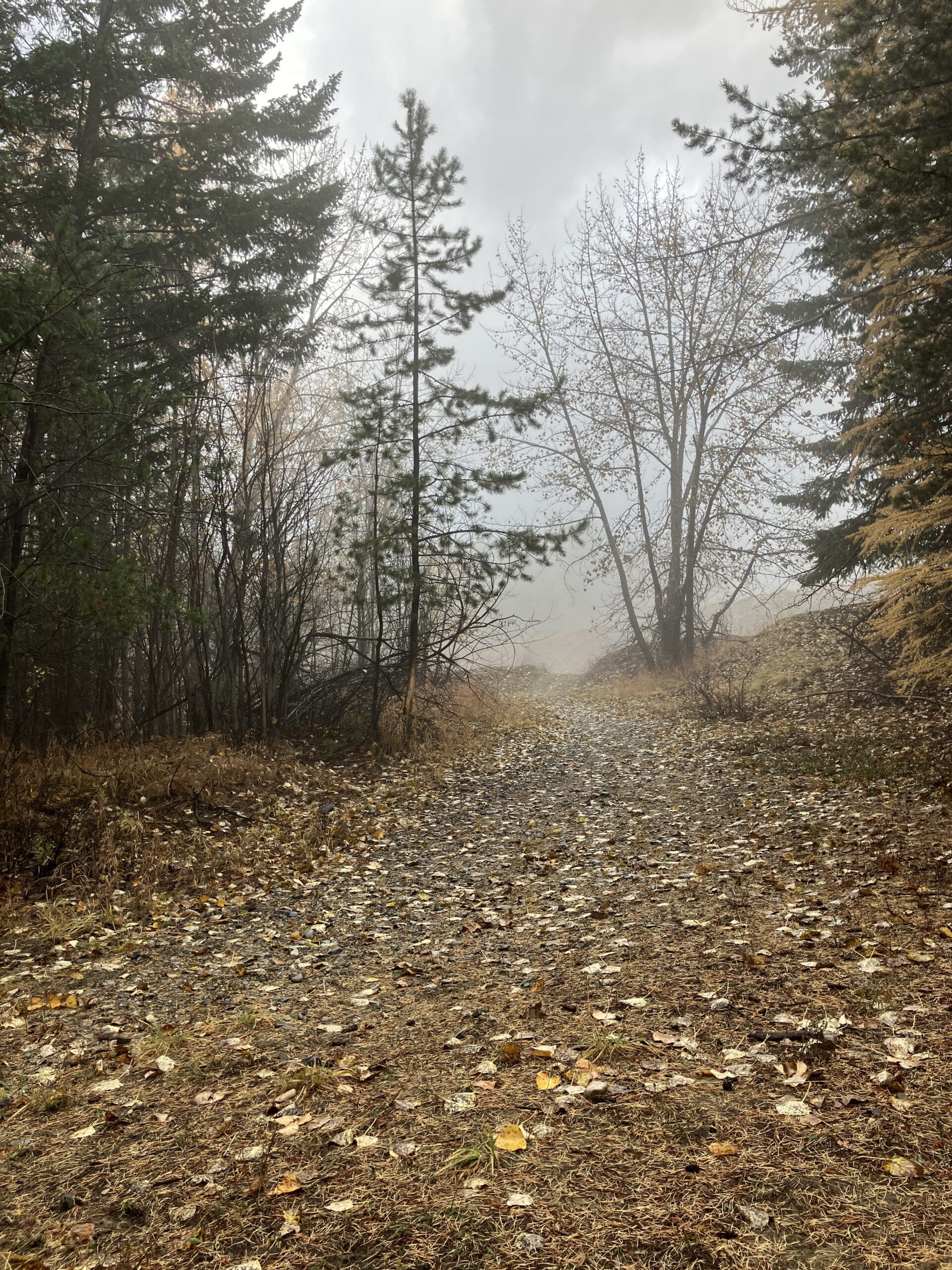
How about healing words?
The healing arts are gentle and nurturing but, perhaps like pacifists protesting a war, they are seen as simply weak? But for me, healing, insofar as I’m able to take it within the context of this disease, is simply an attitude of nurturing.
I see healing as being supportive and compassionate to myself. To support the best in my body so that I can deal as best as I can the indignities of Parkinson’s disease. It does not mean I will become healed from the disease, but rather it is a caring for myself, a response that is, by its very nature, the exact opposite of war.
If you’re picturing me looking like a tie-dyed hippie right now…please rest assured my anger, like my grief about this condition, is often close to the surface…though it has been said that I have an affinity for well-worn jeans and maybe a little too much silver jewellery.
Still.
I am simply choosing to cloak my journey in the language of pacifism, love, hope and kindness, for myself and for others. The headlines can continue screaming their language of war. People can still choose to battle their conditions if that’s what works for them.
But for me, I am choosing the language of kindness.
Maybe that works for you too. I hope so.
Peace be with you.
“All shall be well, and all manner of thing shall be well.” ~ Julian of Norwich
Well said once again Colleen. Thank you for courageously giving us a glimpse into your health journey. The interesting thing about ‘military/war’ language for me is that it causes my body to contract/brace/tense. We know that what contracts cannot expand. I imagine contraction of the body does not help with daily symptoms 💗 Thank you for presenting a perspective of expansion; truly the metaphor for your writing, your art and your life !
Hi Loretta. I hadn’t thought of the contract/brace/tense aspect to the militaristic language, but as soon as I read your comment, I thought, “Yes! That’s exactly what happens.”
The language of war is made to create fear, and fear most definitely contracts us.
Love, on the other hand, expands and enhances.
Thank you for this perspective. I really appreciate it.
Thank you for yet again a beautifully written piece describing your journey. Although we haven’t spoken in person in too, too many years, I could totally hear your Church Lady voice saying, “Isn’t that special?”. And I can totally relate to an affinity to too much silver jewelry. But as another SNL alum declared during the pandemic, “I don’t wear hard pants any more”, I’ve traded in my jeans for soft leggings.
Appreciate your attitude towards this devastating disease, and not allowing it to suppress your sunny spirit. And especially your strength in only showing your positivity to us, your greatest fans and supporters. Soldier on, girl. (Oops, only sorta didn’t mean to do that 🥹)
Tamara. I’m so pleased, like really really laugh-out-loud happy, that you could hear my SNL Church Lady voice. That was exactly what I was channeling when I wrote that. The Church Lady was such a great character.
I laughed too, at your ‘soldier on, girl’ because immediately after posting this blog I caught myself using the same militaristic language in something I was about to post. I caught myself just in time. But my oh my, we are so steeped in our violent culture. It’s amazing how deeply ingrained it is.
To me, inspiration is an invisible energy that goes both ways. You say I inspire you, but I’ve been busy watching your life unfold from afar and feeling so inspired by all that YOU have dealt with.
And yet, you somehow emerge with your sparkle intact.
So throw on those tie-dyed soft leggings, I’ll add another bracelet to my arm and off we shall go, in our respective parts of the world, soldiering on, sparkling and wonderful.
Such wise words. It makes you think again of using cliches inappropriately.
Thanks Catherine. I agree. I think words have power and influence us in ways that we are not always aware.
Namaste, my most brilliant friend
Once again, Colleen you have written a beautiful, thoughtful and wise piece that I’m sure speaks to many. I think of your writing often as an invitation
towards a deeper understanding of how to be a better person. I appreciate how you are able to bring “the personal” into a wider audience, always inspiring. Thank you.
Helen. It’s a funny thing about writing, and not too dissimilar from how I do my art. That is, I have no real plan but start with a bit of something and see where it goes.
All that to say, thank you for your observation of how I take the personal perspective and bring it to a wider vision. I wish I could say that was the plan.
But planned or not, I’m glad that’s where we ended up.
I am so grateful to know so many thoughtful and reflective people in my life.
Thank you for being one of them.
Such interesting and valid points you make. I too am tired of the “she fought a good fight” mentality. It sounds ridiculous and quite archaic. I’m with you – peace, love, and serenity. Being kind and gentle to our bodies and minds, has a much nicer ring to it. And far more obtainable. ⭐️❤️🌟
Blessings Karen. It really does sound archaic. If we actually believe that our body is a temple, it only makes sense that we bring calm and respect into that sacred space. I think that’s a much more beautiful image to work toward rather than a Rambo-style mercenary lobbing grenades as we wage war on ourselves.
As always, a written gift from you, my friend. Your wisdom and elegance in the face of such a crummy disease is inspiring. It inspires me to be compassionate and kind. Thank you!
Thank you Tracey. I write to understand my own thoughts and hope, that making them public, will also inspire me to live them too.
Tracey. Thank you. I don’t know if you recall the WWJD (What Would Jesus Do?) bumper stickers that were a ‘thing’, a while back. Who knows, maybe in some parts of the world it still is?
Anyway, what I do with that is substitute a different friend’s initials in there in as many different scenarios as possible. I do this because each of my friends inspires or teaches me in some way.
So, for instance, WWTD? What would Tracey do? And then I channel some Tracey-vibe and it throws me into a shifting perspective.
All this to say, inspiration is a two-way channel.
So thank you for being part of my inspirational team.
Or to quote William Blake in The Marriage of Heaven and Hell: “Damn, braces: Bless relaxes”. I think he was after aspects of the same thing as you are.
Sharon. That will be my first introduction to Blake (as far as I know). His words are a succinct summary 🙂
So much wisdoms in your words, Colleen.
This idea of waging battle on some part of ourselves, disease or our misdeeds, seems rooted in blaming our hardship on our sins, our notion of shame. Like so much of our vocabulary, these ideas carry the unhelpful baggage of millennia.
My dad had PSP, a neurodegenerative disease, and I find I watch for symptoms in myself every day.
Thank you for sharing your journey and choosing the language of kindness.
Oh Jill. I believe you’ve nailed it with the language link to our notion of sin and shame (”…the unhelpful baggage of millennia.”).
I had not heard of PSP, so I looked it up. Another randomly inexplicable neurological nightmare.
I have always been amazed at how our bodies work when there are so many things that can glitch, which is why I believe we should all be so grateful that (most of the time) we’re able to get out and function.
I’ve always thought the battle analogy was misplaced. Death for all of us is inevitable. Living life with grace and kindness is preferable to fighting a painful battle in our minds.
Carol. So true. None of us gets out of here alive 🙂
I think we all have enough going on without being burned by our own anger and rage.
I love the Dalai Lama’s saying that, “My religion is kindness.”
That is the only religion I find useful.
You have the gift to change the way a person thinks and that is inspiring. Love your kindness and gentle determination to face head on what’s going on in your life ❤️
Zena. Thanks for your kind words.
Writing helps me find out what I think. I feel too, that by putting it out into the world, it makes me accountable to live up to my own words.
Colleen, it seems to me that you have already “won.” By turning the thing on it’s head and shifting the attitude, maybe you can “defeat” the angry ones, whether that pertains to politics or disease. I have seen people with life limiting disease be frustrated to the point of anger at the disease, their loved ones or even themselves, and I have seen others who bring more grace to the situation. I think (and I acknowledge that I am not the one with the disease so what do I really know?) that the ones who approach their situation with grace have an easier time. Should I be faced with this myself (and the likelihood increases as I age) I hope I can choose grace. Besides I have always been partial to tie dye and silver bangles! Hugs to you!
Donna. Really, in the end, doesn’t it all come down to tie-dye and bangles?!
Grace is definitely the goal. Like all goals it is often elusive but I know for sure that raging at our disease, our selves, or the world, ensures that it will never be reached.
I am sure that for some the war-analogy is useful.
For me, it is the opposite…as it seems to foster more anger and how is that useful? Anger uses energy. And energy, with PD, is often in short supply at the best of times.